Restaurant Break Records Before Payroll
Quick-read version · 1 minRestaurant break problems are easier to fix before payroll than after payroll.
In a restaurant, breaks happen around rushes, coverage gaps, side work, and manager judgment. The useful question is not whether every break record looks perfect. The useful question is whether the manager can see what happened, fix the record with a reason, and approve the final time card before hours are handed off.
Start with the shift record
For each employee, the break review should sit inside the normal time card:
- Clock-in and clock-out.
- Break start and end when your process tracks breaks.
- Missed, short, interrupted, or late-added breaks.
- Manual edits and the reason for each edit.
- Manager approval before payroll.
That keeps the break record connected to the shift instead of scattered across manager notes, texts, and payroll edits.
The demo below shows the time-card screen where a manager can review entries before payroll. For restaurant break cleanup, the useful part is not just the clock time. It is the record of edits, approval, and the final payroll-ready time card.
No login required. Opens in one click.
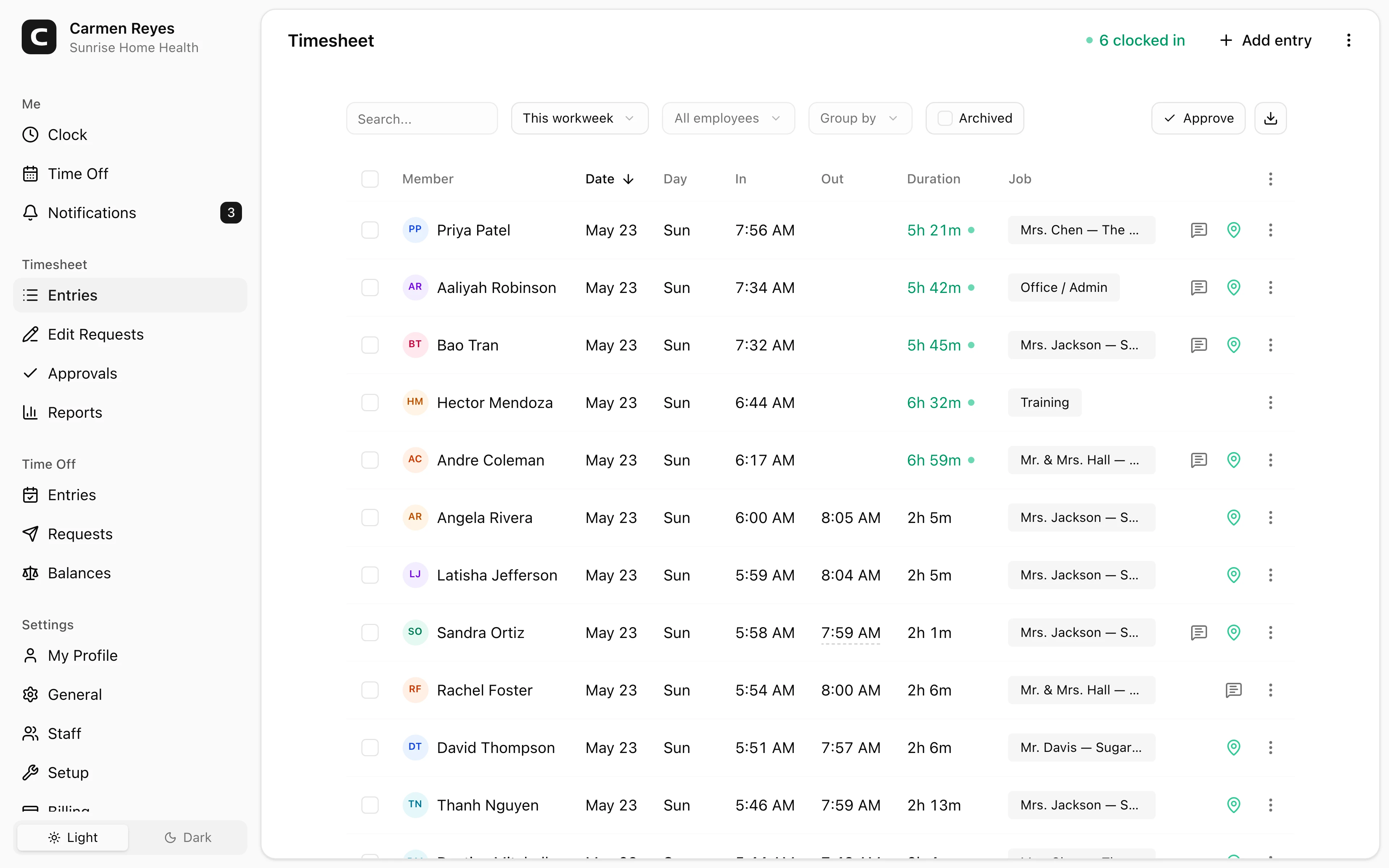
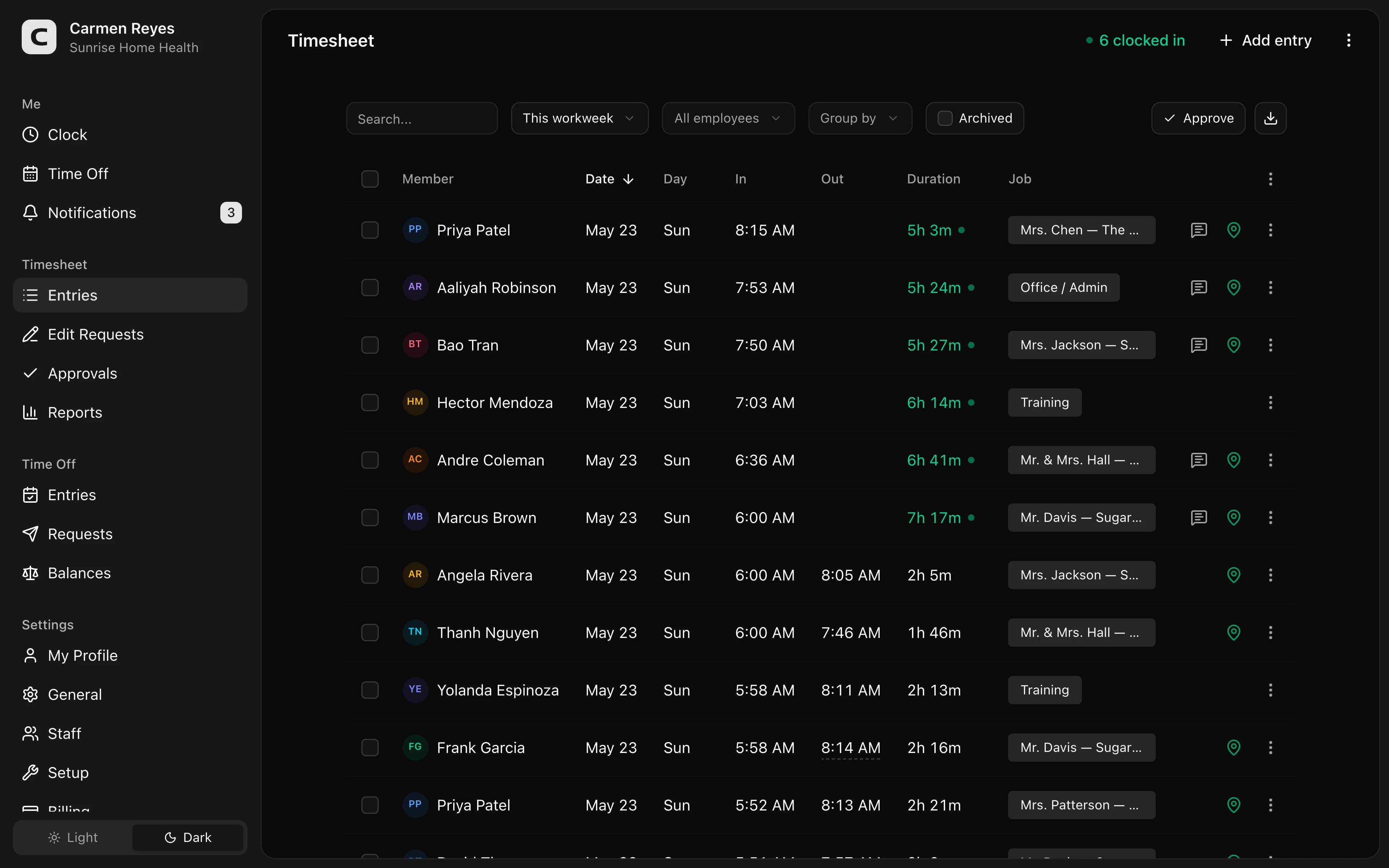 Open a no-login Clockspot demo with time entries, edits, approvals, and payroll-ready records.
Look for the exceptions
A manager does not need to reread every normal break.
The review should highlight the records that could change pay or create a question later:
- No break recorded.
- Break shorter than expected.
- Break added after the shift.
- Break edited by a manager.
- Employee worked through a break.
- Employee clocked into the wrong role or location.
- Time card still unapproved before payroll.
For the general workflow behind break review, read how to track employee breaks for payroll. For state-specific break requirements, read meal and rest break laws by state.
Keep corrections attached to the time card
If a manager changes a break record, the correction should explain what changed.
That does not need to be complicated. A useful correction usually answers:
- Which shift did this affect?
- What time was changed?
- Why was it changed?
- Who reviewed it?
- Was the final time card approved?
If your restaurant needs a copyable manager review process, start with the restaurant break review checklist template. If the issue is broader than breaks, use the restaurant time tracking policy template.
Do not turn break review into blame
Break records can be sensitive because they involve both scheduling pressure and employee pay.
Write the process so employees and managers know what to do when the record is wrong. The goal is a clear time record, not a process that assumes bad intent. A missed or edited break should be easy to review, explain, and approve.
When to review breaks
Review breaks before the pay period closes, not after payroll is already being prepared.
A simple cadence works:
- Managers check open time cards daily or near the end of each shift.
- Employees report missing or wrong break records as soon as they notice them.
- Managers correct records with reasons.
- Final time cards are approved before payroll.
For the approval step, read how to approve employee time cards.
FAQ
What should a restaurant break record include?
A useful break record includes the employee, shift date, break start and end when tracked, any correction, the reason for the correction, and manager approval before payroll.
Should managers review every break before payroll?
Managers should at least review exceptions: missed breaks, short breaks, interrupted breaks, manual edits, and unapproved time cards.
Does break tracking replace state break rules?
No. Break tracking creates the record. State and local rules decide which breaks are required and how they must be handled.
The bottom line
Restaurant break review should make the final time card easier to trust.
Keep break records connected to shifts, keep corrections attached, and approve the final time card before payroll uses it.
Keep reading
How to Track Employee Hours for Payroll
Use this payroll-ready time tracking workflow to capture hours, review exceptions, approve edits, and keep records you can explain later.
How to Approve Employee Time Cards Before Payroll
Use this time card approval workflow to review exceptions, confirm corrections, and send payroll hours you can explain later.
How to Track Employee Breaks for Payroll
Track employee breaks for payroll by recording when breaks start and end, reviewing missed or short breaks, and keeping records with the time card.
Time Clock App for Restaurants: What to Look For
Choose a restaurant time clock app by checking shift clock-ins, breaks, overtime, approvals, edits, payroll export, and records managers can trust.
About Clockspot
Clockspot helps small businesses track employee time and keep payroll-ready records. Used in all 50 states since 2007, we focus on getting time and pay right — including the wage-and-hour rules that shape both.
Clockspot helps restaurants keep break records, corrections, approvals, and payroll-ready time cards together. See how Clockspot supports restaurant time tracking.